 Chris LaBranche signed up for a career day field trip to get out of classes his senior year in high school. “I had no intentions of going and looking for work or a career,” he said.
But the CNC machine and other industrial equipment on display as well as the conversations with machinists and others manufacturing employees caught his attention. Then Asnuntuck Community College staffers told him of the generous scholarships and paid internships available to their manufacturing technology students. By the time he learned of the 90% employment rate for the graduates of the one-year certificate program, LaBranche was set on a manufacturing career.
“That got me hooked right there. I wanted a job right out of school,” LaBranche said. He is now a toolmaker for Dymotek Plastic Injection Molding in Ellington, Connecticut.
Read Full Article ›
This is an excerpt from an article published in a recent issue of theCommunity College Journal, the bimonthly flagship magazine of the American Association of Community Colleges (AACC).
With the leadership of community college educators and their industry partners, the National Science Foundation’s Advanced Technological Education (ATE) program has achieved an impressive record of incubating innovative science, technology, engineering and mathematics (STEM) programs.
ATE’s mission to increase the quality of technicians working in fields of strategic importance to the nation’s economy and security has led to improvements in two-year technical programs, secondary school STEM classes and faculty professional development throughout the nation.
Read Full Article ›
The National Science Foundation(NSF) invites community college students to solve big problems and win prizes in the first-ever Community College Innovation Challenge  (CCIC).
Two-year college students — working in groups of three to five — have until Jan. 15 to submit 90-second videos and essays that explain their science, technology, engineering and math (STEM) solutions to real-world problems in big data, sustainability, infrastructure security, broadening participation in STEM or improving STEM education.
Read Full Article ›
With an evangelist’s zeal, David R. Brown, a program director at the National Science Foundation (NSF), urges community college educators to  apply by the Jan. 13 deadline for the agency’s Improving Undergraduate STEM Education (IUSE) grants.
The elements of the Design and Development tier within the two tracks of the IUSE program fit well with community colleges’ implementation of promising practices for developing the science, technology, engineering, and mathematics (STEM) workforce, according to Brown. Funding in IUSE Engaged Student Learning may be up to $600,000 for Level I awards, and up to $2 million for Level II awards. In the Institution and Community Transformation track, awards are up to $3 million.
Read Full Article ›

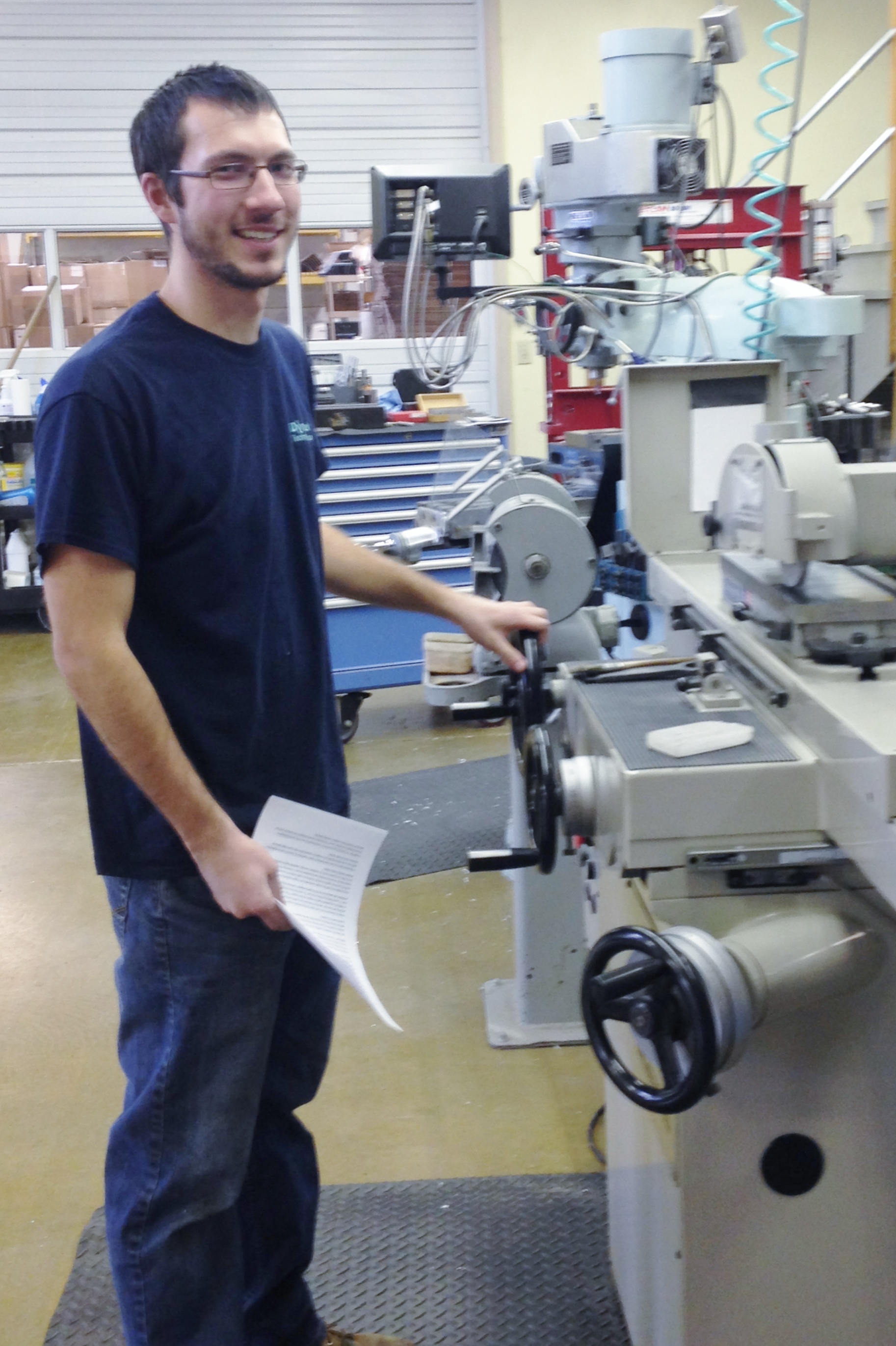 Chris LaBranche signed up for a career day field trip to get out of classes his senior year in high school. “I had no intentions of going and looking for work or a career,” he said.